

Best overall: an oral GLP-1 provider that identifies the prescribed product and discloses continuing plan terms before payment. Best for insurance users: a provider that separates coverage assistance from confirmed coverage. Best for avoiding commitments: a provider with clear renewal and cancellation terms. These are the decision rules for comparing providers in 2026—not endorsements of individual companies.
- Compare the best oral glp-1 providers by exact medication, continuing plan costs, medication inclusion, and cancellation terms.
- Telehealth Ledger is best for readers comparing published telehealth plan terms, not choosing a medically suitable prescription.
- Insurance assistance does not establish coverage; confirm benefits for the exact prescribed product.
- Keep branded tablets and compounded oral preparations in separate comparisons.
Telehealth Ledger compares published telehealth prices, plan terms, and medication inclusion. This guide explains which provider characteristics deserve priority when you want an oral option rather than an injection.
Information only. Not medical advice.
Why this matters
An oral GLP-1 comparison has two separate questions: what medication is being offered, and what service are you purchasing? Answering one does not answer the other. A clearly described subscription can still leave medication charges, pharmacy arrangements, or prescribing decisions unresolved.
A first-month promotion is not a continuing price. For your 2026 comparison, look beyond the opening offer and identify the recurring obligations, required fees, and cancellation rules that apply afterward.
An oral product also needs a precise identity. Do not treat a branded tablet, a compounded capsule, and a compounded dissolving preparation as interchangeable because their marketing uses the same ingredient name.
What makes the best oral GLP-1 providers?
Use these six criteria before comparing company names:
- Exact medication: The provider identifies the product, dosage form, and whether it is branded or compounded.
- Continuing terms: The provider distinguishes introductory terms from subsequent billing and explains the billing interval.
- Medication inclusion: The provider states whether the prescription itself is included or purchased separately.
- Clinical access: The provider explains how assessment, follow-up, and questions about treatment work.
- Pharmacy transparency: The provider identifies the dispensing arrangement and explains how you receive pharmacy information.
- Exit terms: The provider explains renewal, cancellation, prepaid commitments, and what happens if no prescription is issued.
Treat these as separate checks. Clear cancellation terms do not establish clinical quality, and a familiar medication name does not establish what a subscription includes.
For a 2026 shortlist, record the date you read each provider's original terms. Keep conflicting statements marked as unresolved until the provider explains which applies to your enrollment.
Oral GLP-1 providers at a glance
The ranking below compares provider profiles, not named companies. Each profile answers a different purchasing question; none establishes that a medication is appropriate for you.
| Rank and provider profile | Best for | Standout requirement | Key limitation |
|---|---|---|---|
| 1. Full-disclosure provider | Comparing the complete offer | Exact product, medication inclusion, and recurring obligations are explicit | Disclosure alone does not establish clinical suitability |
| 2. Insurance-coordinating provider | Readers using prescription benefits | Coverage work is explained separately from membership charges | Benefits and prescribing decisions remain separate questions |
| 3. Flexible-renewal provider | Readers avoiding prepaid commitments | Renewal timing and cancellation consequences are explicit | Flexible billing does not guarantee continuity of treatment |
| 4. Live-consultation provider | Readers who want a scheduled clinical conversation | Visit format and follow-up access are explained | A scheduled visit does not establish ongoing access |
1. Full-disclosure provider: best for comparing the complete offer
A full-disclosure provider makes the medication and the commercial arrangement understandable before you commit. You can distinguish the assessment service, the prescription decision, the dispensing pharmacy, and any continuing membership obligations.
This is the default profile to prioritize. Without those distinctions, you cannot tell whether two offers cover the same thing.
Full-disclosure provider pros:
- Lets you compare like-for-like medication and service arrangements.
- Makes medication inclusion an explicit question rather than an assumption.
- Gives you terms to save and check against later billing.
Full-disclosure provider cons:
- Detailed commercial terms do not demonstrate better clinical outcomes.
- Written disclosures still need to match the enrollment agreement.
- A clearly described program can still be unsuitable for your circumstances.
Best for: Readers who want to understand the complete offer before choosing a provider.
Ask what happens if the clinician does not prescribe, recommends a different treatment, or requires additional assessment. The answer should address the service agreement without promising a prescription.
Verdict: Shortlist a full-disclosure provider first; hold enrollment until the medication and obligations are clear.
2. Insurance-coordinating provider: best for using prescription benefits
An insurance-coordinating provider explains what assistance it supplies and which decisions belong to your insurer. Separate the provider's service charges from the pharmacy benefit for the exact medication under consideration.
Do not read “accepts insurance” as confirmation that your consultation, membership, and prescription are all covered. Ask which specific service the statement describes.
Insurance-coordinating provider pros:
- Provides a defined process for discussing prescription benefits.
- Helps you identify which coverage questions remain with the insurer.
- Supports a comparison that separates clinical service from medication billing.
Insurance-coordinating provider cons:
- Coverage assistance is not a coverage decision.
- A covered consultation does not establish prescription coverage.
- Administrative support does not guarantee authorization or reimbursement.
Best for: Readers who intend to use prescription benefits and want the responsibilities explained before enrollment.
Use the GLP-1 providers that accept insurance guide to frame your questions. Confirm the exact product and applicable requirements with your insurer rather than relying on a general provider statement.
For a 2026 comparison, retain the insurer's explanation alongside the provider's terms. They answer different questions and should not be substituted for each other.
Verdict: Shortlist for insurance coordination; hold any assumption that the prescription is covered.
3. Flexible-renewal provider: best for avoiding prepaid commitments
A flexible-renewal provider explains the next billing event and how to stop future renewals. The useful distinction is contractual flexibility—not a general claim that enrollment is “easy” or “risk-free.”
Read the cancellation deadline, the method required to cancel, and the treatment of charges already incurred. Also establish whether canceling membership affects pending clinical messages or prescription requests.
Flexible-renewal provider pros:
- Makes future financial commitments easier to identify.
- Lets you distinguish recurring enrollment from a prepaid program.
- Gives you a specific cancellation process to document.
Flexible-renewal provider cons:
- Flexible renewal does not mean every payment is refundable.
- Ending a subscription does not create a clinical transition plan.
- Separate pharmacy transactions need their own terms checked.
Best for: Readers who prioritize avoiding a longer prepaid commitment.
Do not assume that “monthly” means the same thing across offers. A calendar-month subscription and a refill every 28 days use different intervals: 52 weeks contains 13 periods of 4 weeks, while a calendar year contains 12 months. Use the actual agreement rather than the label when comparing obligations.
Verdict: Shortlist when cancellation and renewal are explicit; skip offers that leave the commitment ambiguous.
4. Live-consultation provider: best for a scheduled clinical conversation
A live-consultation provider explains whether you meet a clinician by video, telephone, or another stated format. It also distinguishes the initial assessment from later follow-up.
Choose this profile when a scheduled conversation matters to you. Do not assume a live initial visit includes future appointments, direct messaging, or access to the same clinician.
Live-consultation provider pros:
- Gives you a defined opportunity to discuss questions during an appointment.
- Makes the assessment format easier to compare.
- Lets you ask how later concerns and treatment reviews are handled.
Live-consultation provider cons:
- A live appointment does not establish better care than another assessment format.
- Follow-up access needs separate confirmation.
- Appointment arrangements alone do not explain medication inclusion or billing.
Best for: Readers who want a scheduled clinical discussion before a prescribing decision.
Ask who handles questions between appointments and how to seek help with a time-sensitive concern. Assess those arrangements independently of the company's sales response.
Verdict: Shortlist for your preferred consultation format; hold enrollment until follow-up arrangements are clear.
Keep branded and compounded oral products separate
“Oral GLP-1” describes a category, not a complete product identity. Record the exact name, dosage form, and branded or compounded status before comparing providers.
For branded products, consult the current FDA prescribing information for the exact product. For compounded preparations, ask for the formulation and dispensing pharmacy, and check current FDA information on compounding. Do not use an ingredient name as proof of equivalent approval, evidence, or performance.
| Product description | What to establish | What not to assume |
|---|---|---|
| Branded oral medication | Exact product and current prescribing information | That every use discussed in marketing is an approved indication |
| Compounded oral preparation | Exact formulation, dosage form, and dispensing pharmacy | That it is interchangeable with a branded tablet |
| Unspecified oral program | Product identity before payment | That “oral” identifies what you will receive |
For your 2026 records, date the official material you consult. A provider's summary is not a substitute for product-specific prescribing information or current regulatory guidance.
Build a comparison record before enrollment
Use one record per provider. Keep the same headings so missing answers remain visible rather than disappearing into sales language.
- Product identity: Record the exact medication and dosage form described.
- Plan terms: Record medication inclusion, billing interval, required charges, and commitments.
- Care access: Record assessment format, follow-up arrangements, and pharmacy information.
- Exit terms: Record cancellation procedure and the treatment of prepaid obligations.
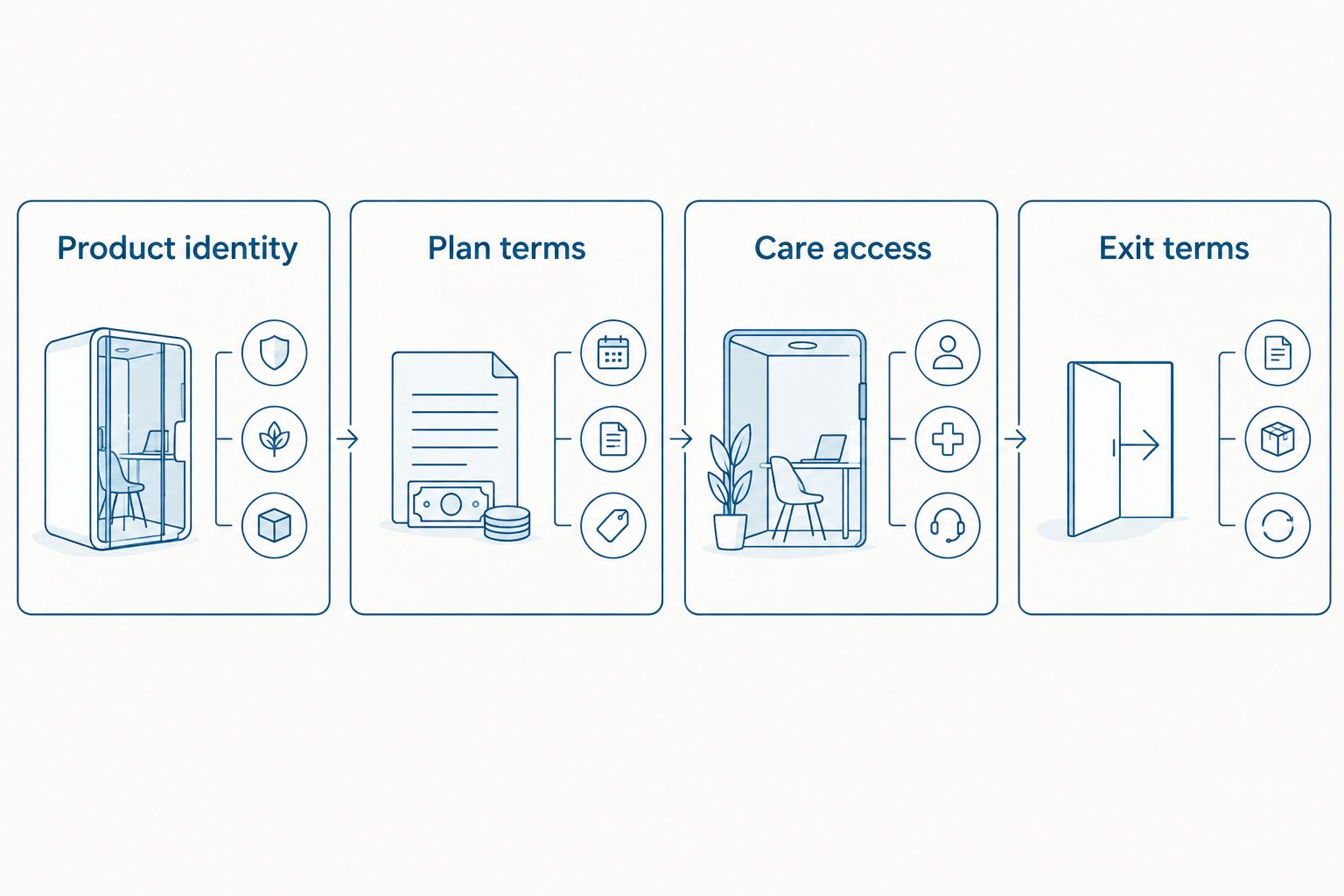
Save the original provider page and the agreement presented at checkout. If the two conflict, ask for clarification in writing before accepting the terms. Do not resolve a conflict by choosing the more favorable statement yourself.
Also confirm whether the provider serves your state. Ask about your specific location without treating a national marketing page as an answer about your own eligibility.
How the ranking works
This guide prioritizes disclosure first, then separates insurance coordination, commitment flexibility, and consultation preference into distinct use cases. It does not assign company scores or claim a named provider wins without comparable, dated provider evidence.
Telehealth Ledger's oral GLP-1 comparison framework separates medication identity from plan terms. Neither contractual transparency nor a lower published charge establishes medical suitability or provider quality.
Which oral GLP-1 provider should you choose?
Start with the full-disclosure profile, then apply your insurance, commitment, and consultation requirements. A provider should satisfy the basic disclosure checks before a preferred feature moves it onto your shortlist.
In 2026, reject comparisons that mix branded and compounded products without identifying the difference. Reject comparisons that treat an opening promotion as the continuing obligation, too.
Ask a clinician about treatment suitability. Use commercial comparisons to understand the agreement—not to decide which medication you should take.
FAQ
What's the best oral GLP-1 provider?
The best starting point is a provider that identifies the exact medication and explains continuing obligations before payment. A named winner requires comparable, dated provider terms; commercial transparency alone does not establish clinical suitability.
Does an oral GLP-1 membership include medication?
Medication inclusion depends on the specific agreement. Ask whether the membership covers clinical services, medication, or both, and confirm any separate pharmacy transaction.
Are compounded oral products the same as branded tablets?
Do not treat compounded oral preparations and branded tablets as interchangeable. Establish the exact formulation and check product-specific FDA information rather than relying on a shared ingredient name.
Does accepting insurance mean my prescription is covered?
No. Confirm coverage for the exact prescription with your insurer, and check separately whether the provider's consultation or membership uses insurance.
What should I check before paying an oral GLP-1 provider?
Check product identity, medication inclusion, required charges, billing intervals, cancellation rules, and state eligibility. Also establish what happens if the clinician does not prescribe.
Is a monthly subscription the same as a four-week refill?
No. A calendar month and a four-week interval are different billing units. Compare the agreement's actual interval and commitment rather than assuming both descriptions create the same annual obligation.
Does a live clinician visit make a provider better?
A live visit establishes the consultation format, not overall provider quality. Compare follow-up arrangements and medication disclosures separately, and choose an assessment format that meets your needs.
One last thing
Ask when service billing begins relative to the prescribing decision. Paying for an assessment and paying for medication are different transactions; establish what each payment purchases and what happens if treatment is not prescribed.
That question belongs on your shortlist before any promotional claim. Information only. Not medical advice.